
The Ultimate Product Roundup: Female External Catheters, Night Bags, and Travel Options
A Comfortable Alternative for Incontinence Management
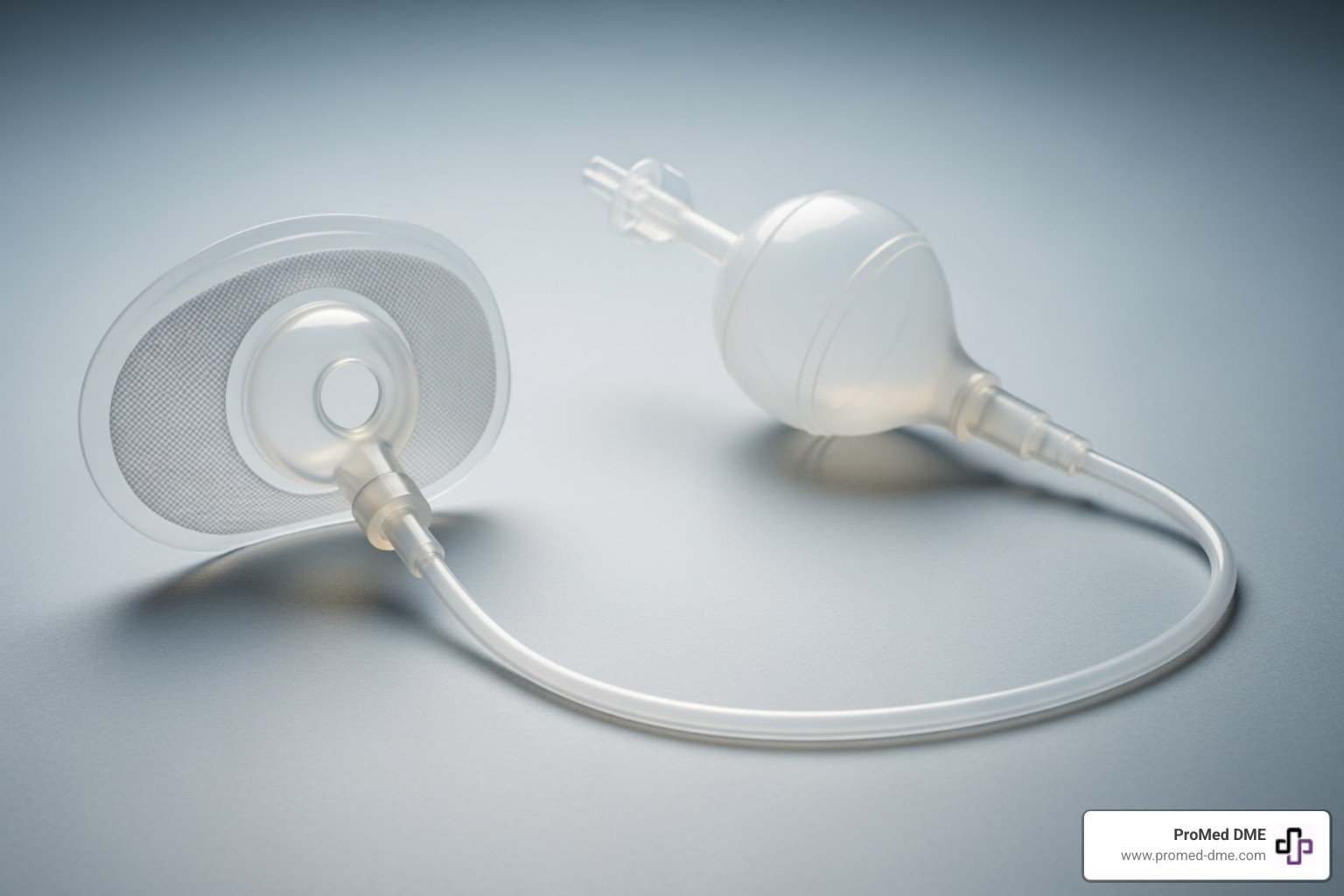
Female external catheters are non-invasive devices designed to manage urinary incontinence by collecting urine without entering the bladder. They work by:
- Collecting urine externally without any insertion into the urethra or bladder.
- Using wicking technology with soft, flexible materials to draw urine away from the skin.
- Connecting to collection bags to store urine in discreet containers.
- Reducing infection risk because, unlike indwelling catheters, they don't enter the body.
- Improving comfort and dignity, allowing for better sleep and fewer trips to the bathroom.
These devices are ideal for women seeking alternatives to pads, individuals with temporary mobility limitations, people at risk for nighttime falls, and those who want to avoid the complications of traditional catheters. According to the National Institute of Diabetes and Digestive and Kidney Diseases, urinary incontinence affects millions of women, making effective management solutions essential.
Managing incontinence can be overwhelming. As one user shared: "I typically did not have to get out of bed at night to use the bathroom... better sleep." This kind of improvement is significant when dealing with a chronic condition.
Unlike indwelling catheters that remain inserted in the bladder, female external catheters sit outside the body, using suction or absorbent materials to wick urine away. This means a significantly lower risk of urinary tract infections (UTIs). Hospitals using these devices saw catheter-associated UTI (CAUTI) rates drop from 3.14 to 1.42 per 1,000 catheter days.
The most well-known system is the PureWick™, which uses low-pressure wall suction, but other portable options for home and travel use are also available.
Understanding Your Options for Female External Catheters vs. Other Methods
When dealing with urinary incontinence, knowing your options is key. Female external catheters work outside your body, a simple distinction that changes everything about comfort, safety, and peace of mind.
Traditional indwelling (Foley) catheters are inserted through the urethra into the bladder. While necessary in some medical situations, they carry significant risks, primarily Catheter-Associated Urinary Tract Infections (CAUTIs). Because they create a direct pathway for bacteria, UTIs are a common and painful complication. Indwelling catheters can also cause urethral strictures, bladder stones, and tissue trauma, making them uncomfortable and restrictive.
Intermittent catheters are inserted only when needed and then removed. This reduces some risks, but still requires inserting a tube into the urethra multiple times a day, which can be challenging for those with limited mobility and still carries an infection risk with each use.
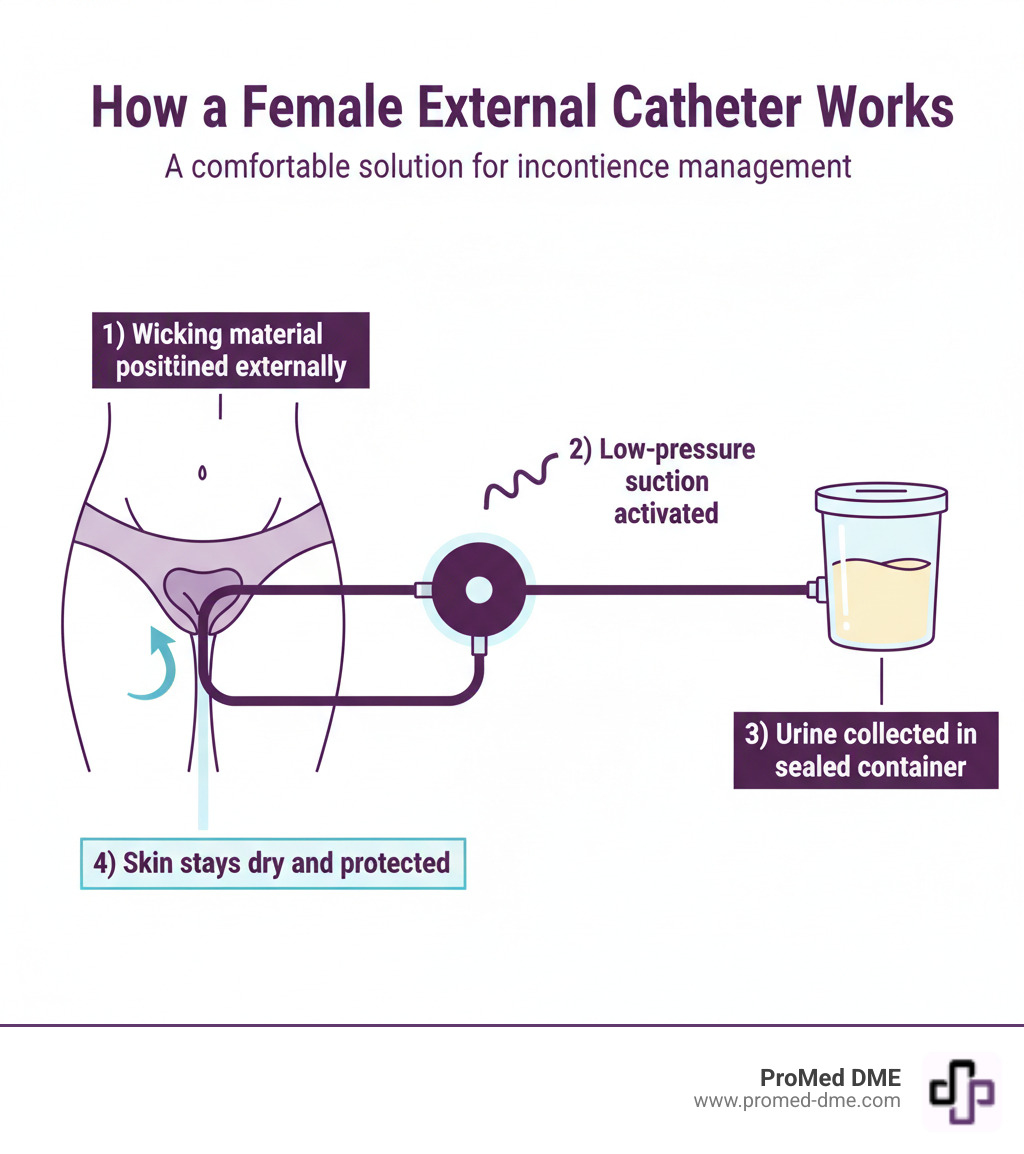
Female external catheters change the equation. They collect urine externally using soft wicking materials, which dramatically lowers UTI risk and improves comfort. Your skin stays dry and protected, preventing breakdown and pressure injuries. You can move more naturally, sleep better, and maintain your dignity without the constant awareness of an internal device.

Why Choose a Non-Invasive Approach?
The advantages of a non-invasive approach protect your health and reclaim your independence.
Lower UTI risk is the most compelling reason. By not breaching the body's natural defenses, external catheters sidestep the primary infection pathway. In over 4,500 U.S. facilities that adopted them, CAUTI rates dropped from 3.14 to 1.42 per 1,000 catheter days.
Comfort improves dramatically without an internal tube. Users often describe the relief of being free from the constant irritation of internal devices.
Greater independence comes with a device you can often manage yourself, restoring a sense of autonomy that is vital for mental and emotional well-being.
Skin integrity is preserved as wicking technology keeps the perineal area dry. This is critical for preventing skin breakdown and pressure injuries, especially for those with limited mobility.
Home use becomes practical with systems simple enough to use without medical staff, providing a discreet solution in a familiar environment.
Sleep quality improves by eliminating nighttime bathroom trips and worry over leaks. In one survey, 120 of 145 PureWick™ users reported they no longer had to get out of bed at night, significantly reducing fall risks.
Comparing Catheter Types
Here's how the three main catheter types stack up:
| Feature | Female External Catheter (FEUC) | Indwelling Catheter (Foley) | Intermittent Catheter |
|---|---|---|---|
| Invasiveness | Non-invasive (sits outside the body) | Invasive (inserted into the bladder) | Invasive (inserted into the bladder, then removed) |
| UTI Risk | Significantly lower (doesn't enter bladder) | High (direct pathway for bacteria) | Moderate (repeated insertion carries risk) |
| Comfort Level | High (no internal tube, keeps skin dry) | Low (constant internal presence, irritation) | Variable (brief discomfort during insertion) |
| User Application | Simple, external placement, often self-managed | Requires medical professional for insertion and removal | Self-insertion multiple times daily |
| Ideal Use Case | Urinary incontinence, skin protection, fall prevention, home use, long-term management, post-surgical immobility | Acute urinary retention, precise output monitoring, critical care, long-term bladder drainage (with high risk) | Bladder emptying on demand, neurogenic bladder, post-op short-term retention |
This comparison shows why external catheters are becoming a preferred choice for managing incontinence without sacrificing comfort or safety.
Choosing the Right System: A Roundup of Features and Options
Finding the right female external catheter system means matching features to your lifestyle for comfort and independence. Modern systems are designed with you in mind.
Most female external catheters are either suction-based or adhesive-based. Suction-based systems, like the PureWick™, use gentle, low-pressure suction to actively pull urine away from your body through a soft wick, keeping skin dry. Adhesive-based systems attach directly to the skin and are simpler but less active in managing moisture.
For materials, look for soft, flexible, fabric-like materials that conform to your body without causing irritation, especially for overnight use. A proper fit is crucial to prevent leaks and ensure the catheter stays securely in place, often with the help of mesh underwear for gentle support.
Collection bag options vary by need. Nighttime use calls for a larger canister (some hold up to 1800mL) for uninterrupted sleep. For daytime or travel, smaller, more discreet bags offer portability.
Key Features of Modern Female External Catheters
Understanding these features helps you choose the best system for your needs.
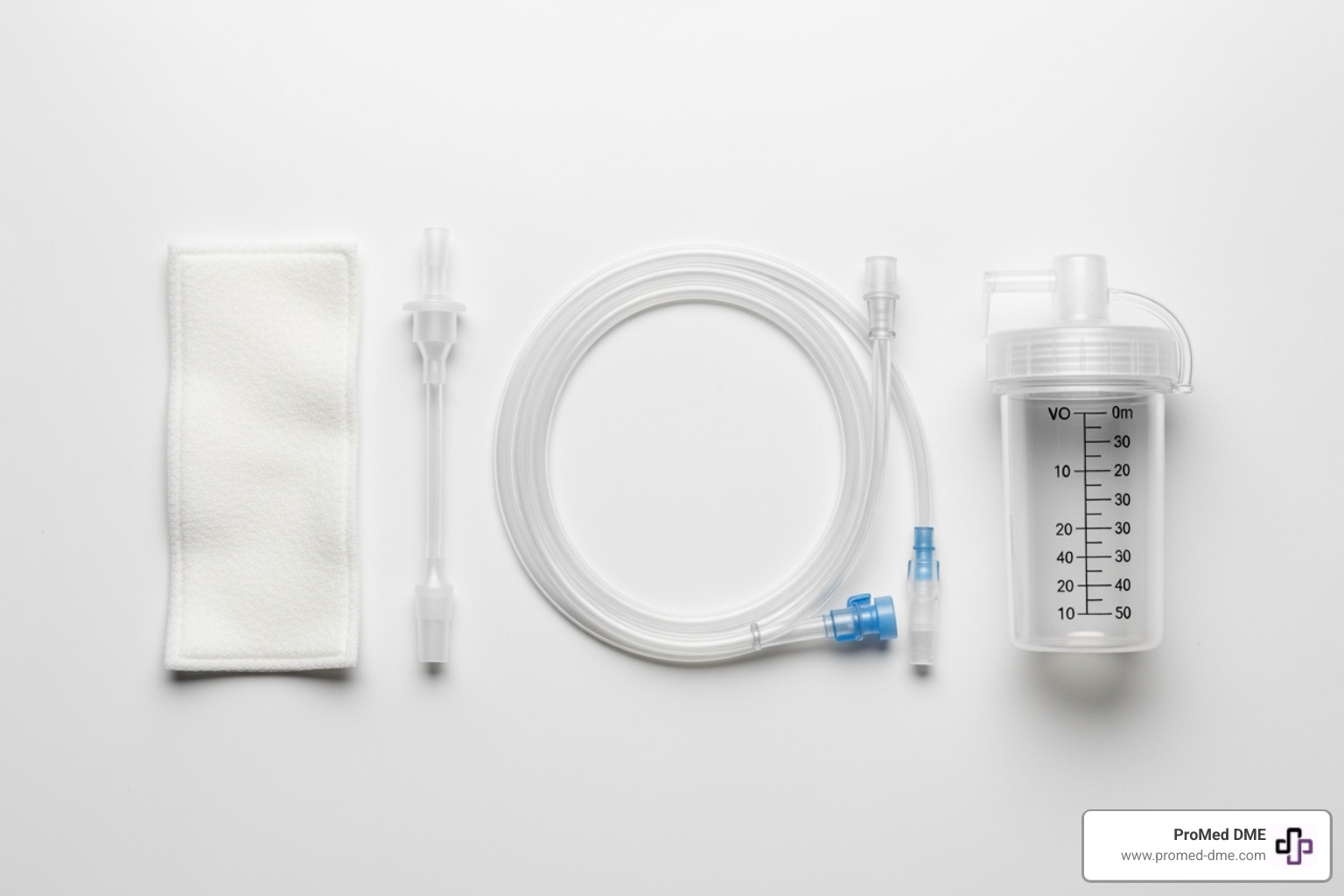
Low-pressure suction: Gentle, continuous suction actively wicks urine away from the body into a collection canister. The BD PureWick™ External Catheter uses this non-invasive process to keep you dry.
Soft, flexible fabric: Quality systems use materials that conform to your body's contours without pinching or creating pressure points, ensuring comfort for extended wear.
Wicking technology: Similar to athletic wear, this technology actively draws moisture away from your skin, rather than just absorbing it. This keeps the perineal area dry and reduces the risk of skin breakdown.
Secure placement: The best designs tuck gently between the labia and gluteus, staying in position during movement. Pairing the catheter with mesh underwear provides support without feeling restrictive.
Compatibility with night bags: Connecting to a high-capacity collection canister, like the PureWick™ system's 1800mL canister, allows you to sleep through the night without interruption.
Portability for travel: Compact designs with easy-to-disconnect components and discreet cases make it possible to manage incontinence confidently while away from home.
Considerations for Night Bags and Travel Use
Practical details can make all the difference for a good night's sleep or confident travel.
Collection canister capacity: A larger capacity, like the 1800mL found in the PureWick™ system, means you won't have to wake up to empty the bag. For travel, a smaller bag may be more discreet.
Tubing length and management: You need enough flexible, kink-resistant tubing to move freely, but not so much that it gets tangled. Tubing management clips can help keep it organized.
Portable power sources for suction: While hospitals have wall suction, home users often need a dedicated pump. Battery-operated units are perfect for travel or moving around the house.
Discreet carrying cases: Look for systems with travel-friendly cases to maintain privacy and confidence while away from home.
Ease of cleaning and maintenance on the go: For single-use wicks like the PureWick™ (used for up to 12 hours), pack enough for your trip. Reusable components like pumps and canisters should be easy to clean with basic supplies.
Practical Guidance: Cost, Coverage, and Proper Use
Understanding the real-world details of female external catheters—cost, insurance, and proper use—is crucial. At ProMed DME, we're here to make the process as straightforward as possible.
Are Female External Catheters Covered by Insurance?
This is a common and important question. Coverage for female external catheters is improving. Medicare now covers the PureWick™ female external catheter system, which has made it accessible to many more people.
If you have Medicare Part B, you may be eligible for reimbursement. We recommend calling your Medicare representative to discuss your specific situation and documentation requirements.
For private insurance, coverage varies by plan. Some companies classify these devices as durable medical equipment (DME). Contact your provider to ask about your benefits, criteria, and pre-authorization needs. A prescription or letter of medical necessity from your doctor is almost always required for reimbursement.
At ProMed DME, we work with most insurance plans to minimize your out-of-pocket costs and can help you steer the claims process. For general clinical guidelines and procedural information, you can review these clinical guidelines for external catheter use.
The PureWick™ System can be purchased without a prescription, but one is needed for insurance reimbursement. Costs typically include the initial system and ongoing disposable supplies (e.g., a case of 30 PureWick™ wicks is around $500). Our AutoShip programs can help you save, with 10% off your first order and 5% off reorders.
Most female external catheter products are also HSA/FSA eligible. You can typically use your card at checkout, but confirm eligibility with your plan administrator.
Best Practices for Application and Care
Proper application and care are key to comfort and effectiveness.

Start with clean, dry skin. Before application, cleanse the perineal area with mild soap and water and dry it completely. Avoid using barrier creams where the catheter sits, as they can interfere with wicking.
Placement is everything. Gently separate the labia and tuck the soft wick between the gluteus and labia. The top of the wick should align with the pubic bone. Ensure it's snug but not tight. Never insert the catheter into the vagina or any other body opening.
Check your fit. After placement, ensure the catheter feels secure. For suction systems, verify that the suction is active (usually 40 mmHg) and that urine is flowing.
Replace regularly for best results. Most external catheters are single-use and should be replaced every 8-12 hours (or immediately if soiled with feces or blood) to maintain hygiene.
Watch your skin closely. Each time you change the catheter, inspect the perineal area for redness or irritation. It's also good practice to check the skin every 2 hours when repositioning.
Keep your collection system clean. Follow the manufacturer's instructions for cleaning reusable components. Change suction canisters when they are ¾ full or at least every 24 hours, and change tubing daily.
Preguntas frecuentes sobre sondas externas femeninas
When considering a new incontinence solution, questions are natural. Here are answers to the most common concerns we hear about female external catheters.
How do you keep a female external catheter in place?
Keeping your catheter secure is straightforward with a few good habits.
Proper initial placement is the foundation. When the soft material is tucked correctly between the labia and gluteus, it sits in a natural pocket that holds it in place.
Mesh underwear provides gentle compression over the catheter, keeping it firmly against your body, especially during movement or sleep.
Ensure the area is clean and dry before placement. Moisture or cream residue can prevent the device from staying put.
Check the position after moving. After repositioning in bed or a chair, a quick check ensures the catheter hasn't shifted. Clinical guidelines recommend assessing placement every 2 hours.
Can you use an external catheter while sitting or on your side?
Yes. A major advantage of modern female external catheters is their versatility. They are designed to work effectively whether you are lying on your back, on your side, or sitting in a chair.
The key is proper positioning to maintain contact with your body. The PureWick™ System, for example, is designed to function in all these positions, giving you the freedom to rest comfortably.
One important caution: avoid placing pressure on the tailbone area. Do not tuck the catheter behind the tailbone, as this can cause pressure injuries. Always ensure the tubing isn't kinked or blocked, as this will stop urine from flowing to the collection canister.
What are the main causes of leaks and how can they be prevented?
Leaks are frustrating but usually preventable once you understand the common causes.
Improper placement is the most frequent cause. If the catheter isn't snugly positioned, urine can bypass it. Take your time with application and check the placement first if you notice leaks.
Incorrect suction levels can be an issue for suction-based systems. Most work best at 40 mmHg continuous suction. Too low, and it won't collect effectively; too high, and it may cause discomfort.
A full collection canister will cause urine to back up. Monitor the canister and change it when it's ¾ full, or at least every 24 hours.
Kinked or blocked tubing stops the flow. Before settling in, trace the tubing to ensure it's free from kinks or obstructions. Changing tubing daily also prevents buildup.
Individual anatomy can sometimes affect fit. If you've tried everything and still experience leaks, a different brand or design might be a better match. Our nurse on staff at ProMed DME can discuss your situation and suggest alternatives.
Find the Right Incontinence Solution for Your Needs
This guide has explored female external catheters, highlighting their benefits: significantly lower risk of UTIs, better skin protection, improved sleep quality, and the comfort and dignity you deserve.
Managing incontinence is personal, affecting your confidence, sleep, and ability to live life on your own terms. Female external catheters offer an effective way to manage incontinence without the discomfort, infection risk, and loss of independence associated with invasive devices.
At ProMed DME, we understand that finding the right solution is about finding peace of mind. Whether you're recovering from surgery, dealing with mobility challenges, or seeking a better way to manage chronic incontinence, we're here to support you.
Based in Stuart, Florida, and shipping across the U.S., we are more than a medical supply company; we are a team that cares about your well-being. That's why we have a dedicated nurse on staff to answer your questions, work with most insurance plans to minimize your costs, and offer free shipping on all orders.
If you're tired of bulky pads or worried about the risks of indwelling catheters, talk to your healthcare provider about female external catheters. Ask if a non-invasive option could work for you.
When you're ready, our team at ProMed DME is here to help you steer insurance, choose the right system, and find a solution that fits your life.
Explore our complete range of urology supplies and find how we can help you feel comfortable, confident, and in control.
Recursos y artículos relacionados
Manténgase informado con las entradas de nuestro blog informativo.
Descubra las ventajas de ProMed
y pruebe nuestros productos
Ofrecemos envío gratuito y un legendario servicio de atención al cliente para garantizar que reciba los
mejores productos de DME para sus necesidades.